

USask student wins national award for Northern research
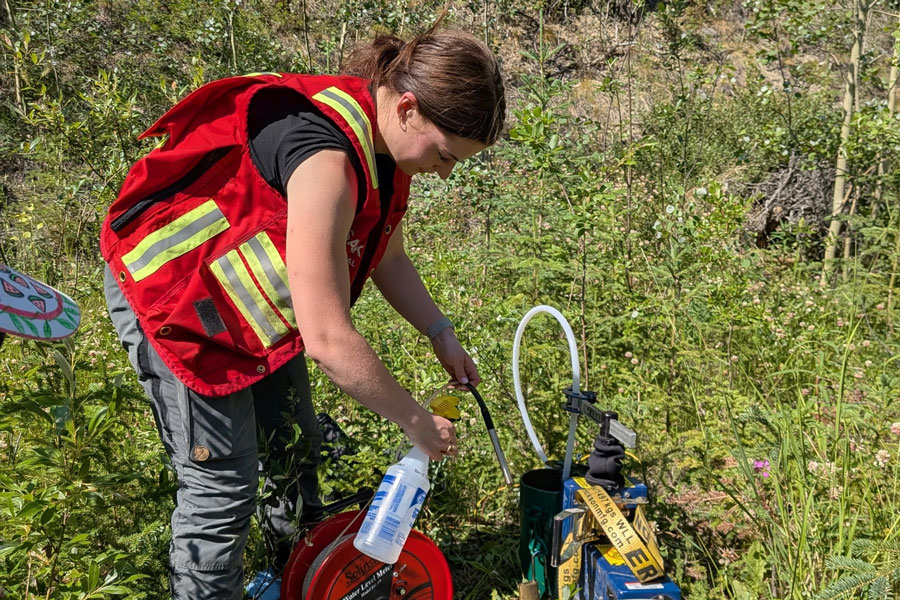
USask graduate student Emilie Perreault has received national recognition for her research into groundwater vulnerability to metal contamination in Whitehorse, Yukon.
Perreault was named the 2025 winner of the George Hobson Award from Polar Knowledge Canada. The award is one of four prizes issued annually by the Government of Canada polar science agency to students conducting research that advances knowledge relevant to the North and benefits Northern communities.
Perrealt, a Master of Science student, is examining how geology and and environmental factors influence groundwater chemistry and quality in Whitehorse and surrounding areas, where almost all residents rely on groundwater for drinking water. The project is one of many that demonstrates USask’s commitment to research, education, and community collaboration in the North.
“Growing up and being a resident of Whitehorse, this research is especially meaningful to me. Safe and reliable drinking water is vital for residents, community well-being, and traditional ways of life in the North. By collecting and analyzing groundwater samples, this research will provide new insights into groundwater quality and contaminant mobility, supporting informed decision-making, safe water use, and long-term management strategies,” said Perreault.
Additional Examples of USask’s Commitment to the North
In 2023, 26 students completed their bachelor of education (BEd) degrees from USask in their home community of Cumberland House. The students were part of the Cumberland House cohort—referred to locally as the Cree Teacher Education Program (CTEP). As a result of the CTEP cohort, the two schools in the area no longer face staffing shortages. Because of this success, a second cohort program is scheduled to start in Winter 2026.
USask’s Science Ambassador Program connects STEM education with Indigenous Ways of Knowing in remote communities. In 2024, it reached over 2,000 students, 94% Indigenous, with 87% of teachers reporting increased science interest. Since 2007, it has engaged 27,000 students and 1,360 teachers, supporting long-term educational success.