


Helping things grow is part of University of Saskatchewan’s DNA. Whether it’s educating the next generation of nurses and doctors, creating high-value crops for producers, or engineering a vaccine to protect the world’s livestock from devastating disease, USask is driving growth and creating value in Saskatchewan.
USask Support
USask attracts talent and builds workforce. The university graduates an average of 4,500 highly skilled people every year. Nearly 70% stay in the province: working, building businesses, starting and growing families, contributing to the economy, and growing the provincial tax base.
USask supercharges the economy. Every $1 invested into USask by the Government of Saskatchewan generates $3.64 of GDP. In 2024, that was $2 billion.
USask innovations are creating wealth for future generations. The university designs better, higher-yielding, tougher crops. If you’re eating lentils anywhere in the world, chances are, it’s a USask lentil. USask has produced over 500 new crop varieties and made Saskatchewan the world’s single largest producer of lentils.
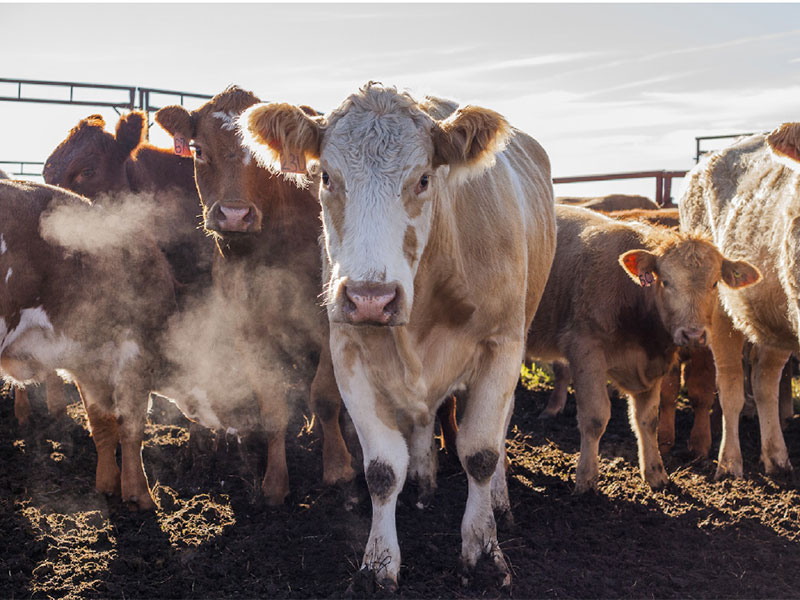
From producing healthier cattle to powering tomorrow’s nuclear future, USask researchers and graduates are leading Saskatchewan’s growth, stewarding the land, and preparing Saskatchewan’s next generation of innovators.
90%
USask is helping the Government of Saskatchewan achieve 90% of its 30 goals to build a strong economy, strong communities, and a stronger Saskatchewan by 2030.
Goal: Growing Saskatchewan’s economy prudently
- USask contributed $2.0 billion to Saskatchewan’s economy for 2024/25.
- Every $1 invested into USask by the Saskatchewan government translates to $3.64 of GDP and $1.99 in labour income.
- USask contributes nearly 2% of Saskatchewan’s total economy.
- One third of the province’s costs to support the university is returned through the university’s tax generation.
Goal: Growing Saskatchewan’s exports and incoming investment
- Visitors to USask spent an estimated $100.4 million in Saskatchewan in 2024/25 alone.
- USask draws visitors from across Canada and around the world for conferences, Huskies sporting events, educational and research collaborations, and to visit friends and family.
- Discover Saskatoon and Destination Canada promote the University of Saskatchewan as a destination for business events, research, and investment in three sectors: agribusiness, the life sciences, and mining.
- USask has a global network of 177,000 living alumni spread across 120 countries.
- Of the 10 countries the Government of Saskatchewan-led export missions to in 2023-2024, USask already had partnerships and agreements in nine of them.
Goal: Growing Saskatchewan’s population, labour market and quality of life
- USask produces an average of 4,500 graduates annually.
- USask grads stick around: nearly 70% stay in Saskatchewan. Over the past 10 years, USask added more than 27,000 graduates to the Saskatchewan workforce.
- Getting a degree means you’re more employable (77% employment vs. 60% with high school only).
- For each degree earned, your average annual earnings increase by more than $13,000. That’s between $850,000 and $1.4 million over a lifetime.
- USask employs 13,320 people directly and indirectly in the province.

Goal: Growing Saskatchewan’s economy for everyone
- USask innovations are supercharging the tech sector. Its innovations generate 3x the median licensing revenue of comparable institutions around the country.
- USask has created new crop varieties, new vaccines, new medical imaging technologies, new tools, new technology for chemical processing: all leading to new revenue streams.
- USask degrees are uplifting Indigenous people improving career opportunities and increasing earnings.
- Self-declared Indigenous enrolment at USask is among the highest in the country and is increasing with the goal of surpassing the percentage of Indigenous people in Saskatchewan.1
Goal: Growing Saskatchewan’s agriculture productivity
- USask's Crop Development Centre (CDC) has created more than 500 varieties across 40 different crops. Those crops are higher yielding, more tolerant to drought and extreme weather, and more resistant to diseases and pests.
- For every $1 invested in USask CDC research, growers received a return of $11 dollars. For lentils research, that return was $37-to-$1.
- USask research has powered Canada to become the world’s single biggest exporter of lentils. Ninety percent of Canada’s lentil exports were designed at USask.
Goal: Growing Saskatchewan’s natural resource sector
- Every day, USask Engineering, Geology, and Physics graduates are helping pull 458,000 barrels of oil out of the Saskatchewan ground, while applying their know-how to reduce environmental impacts.
- Agriculture, natural resources and energy production, healthcare, and manufacturing, as well as emerging sectors, such as software, clean tech, and biotechnology, are driving Saskatchewan’s $110 billion dollar economy. These industries benefit from workers with USask degrees in the arts and sciences, agriculture, engineering, software, the health sciences, law, business and accounting, as well as workers in the skilled trades.
Goal: Growing Saskatchewan’s green economy and energy secure future
- USask supports research in carbon sequestration, capture, and storage.
- USask is training the next generation workforce to design, build and manage Canada’s nuclear energy. USask hosted Canada’s first IAEA Nuclear Energy Management School and is researching small modular reactors.
- Capital projects, through the Build Better bond program, are moving toward the construction of greener buildings and systems on the USask campus.
- Energy efficiency projects funded by USask’s Sustainability Revolving Fund have generated nearly $1 million in utility savings, nearly doubling the fund from 2014 to 2024.
- USask empowers climate action, supporting faculty in incorporating sustainability in to their teaching. More than 300 courses across 45 departments now include sustainability.2
Spotlight
Loading...
- Statistics Canada (2022). Focus on Geography Series, 2021 Census of Population: Province of Saskatchewan.
- See USask Office of Sustainability. (2025). Sustainability Course Inventory. Accessed 3 November 2025.